
Posts in category 'Buying Land'
Subscribe and receive email notifications of new blog posts.
 RSS Feed
- 2026 | 17 Posts
20
Ep. 006: Bryce Irlbeck with Boa Safra Ag
Section 180 and Farmland: The Soil Fertility Tax Deduction Often Overlooked
When acquiring agricultural land, most buyers evaluate primary financial metrics: price per acre, soil productivity ratings, and anticipated cash rental yields. However, few buyers account for existing soil fertility as an explicit, deductible asset. On the latest episode of TrophyCast, Bryce Irlbeck—co-owner of Boa Safra—explained how Section 180 of the Internal Revenue Code allows land buyers to utilize soil nutrient value as a legitimate tax deduction, presenting an advantageous strategy for agricultural property acquisitions.
Bryce is an active agricultural producer, managing approximately 10,000 acres of organic cropland across Iowa and Nebraska. After transitioning to organic farming in 2015, he expanded operations from an initial 800-acre family farm. He and his partner, Tyler Brooke, founded Boa Safra approximately six years ago, which now operates with a team of over 70 professionals. The company's name—Portuguese for "good harvest"—reflects the founders' operational background in Brazil.
Disclaimer: This summary outlines key concepts of a tax strategy discussed by a podcast guest. It does not constitute formal financial, legal, or tax advice. Consult a certified public accountant or tax professional prior to implementation.
The Nuts and Bolts of Section 180
As Bryce notes, Section 180 is an established provision in the tax code dating back to 1960. The fundamental concept holds that residual nutrients bound within agricultural soil represent a capital asset distinct from land equity, comparable to grain storage, perimeter fencing, or subsurface drainage tile. Because the Internal Revenue Service does not prescribe a specific schedule of eligible nutrients, Boa Safra bases its assessments strictly on third-party university agronomic standards, evaluating standard macro and micronutrients essential to crop yield.
Key operational parameters and metrics include:
-
Average write-off: around $1,700 per acre.
-
Real-world example: A qualifying 100-acre piece yields around $170,000 in total deductions. If you're sitting in a 40 percent tax bracket, that puts roughly $68,000 back in your pocket.
-
The timeline: If you farm the land yourself, you can take the full deduction in year one. If you're an investor leasing it out, you generally amortize it across three to seven years.
-
Deduction, not a credit: You can't transfer or sell it. It files through Schedule F, and any unused portion rolls forward into future tax years.
-
Already bought land? If you closed on a parcel a few years back, you can often catch up using IRS Form 3115—the same mechanism used when you forget to depreciate farm equipment.
Evaluating Your Ground
Whether ground qualifies boils down to land use. Bryce breaks it down like this:
-
Tillable ground and pasture are fair game.
-
CRP land doesn't qualify upfront because you've contracted with the government to keep it out of production. Bryce suggests waiting out the CRP contract before pursuing the deduction, though accountants differ on the exact timing.
-
Standing timber gets tricky. While state programs and the USDA often treat timberland under the agriculture umbrella, federal tax law isn't as clear. His team advises against pushing the issue on pure timber. Fruit orchards, however, do qualify.
-
Mixed-use properties only count for the working acreage. On a 100-acre farm with 80 tillable acres and 20 acres of hardwood draw, only the 80 tillable acres count.
-
Strict recreational land lacking agricultural operations or livestock is generally ineligible under audit standards. However, a recreational parcel featuring tillable acres leased to a local agricultural tenant remains eligible for the income-producing portion.
How the Assessment Works
Soil sampling must occur following title transfer to establish the new cost basis. Sampling protocols utilize a 5- to 15-acre grid tailored specifically for tax reporting rather than standard field management. Laboratory analysis typically requires 30 to 60 days, and active standing crops may influence sampling timing. Boa Safra then generates a comprehensive technical report for tax professionals, supported by scientific documentation to withstand IRS audit scrutiny. Services are billed at a flat rate of $40 per acre nationwide using localized field technicians, across an estimated 7,000 to 8,000 client accounts. To date, these evaluations have successfully navigated ten IRS audits without adjustment, despite the absence of formal IRS procedural guidelines.
Boa Safra maintains a specialized advisory scope. The firm does not prepare tax returns, act as a real estate broker, or replace traditional CPAs, functioning instead as a technical consultant to existing professional advisors.
The Trade-Offs
Bryce emphasizes that election under Section 180 involves cost-basis adjustments. Claiming the deduction reduces the adjusted basis in the property. For instance, purchasing land at $10,000 per acre and deducting $2,000 in nutrient value lowers the adjusted cost basis to $8,000. A subsequent sale at $12,000 per acre results in a taxable gain on $4,000. Under a 1031 exchange, the reduced basis carries forward into the replacement property. Holding the asset until transfer to heirs—at which point a step-up in basis occurs—can offset this effect, though such planning requires review with an estate professional.
The Trophy team noted that market participants seldom account for soil nutrient deductions during acquisition negotiations. A recent transaction involving a 96-acre, highly tillable parcel in Clark County, Missouri, realized approximately $15,250 per acre—illustrating the class of high-value property where such valuations carry significant weight. Because soil testing must occur post-closing, sellers cannot provide pre-closing assessments, but buyers should incorporate potential deductions into acquisition underwriting.
Land Management: Leasing, Divestiture, or Subdivision
Bryce consulted the Trophy team regarding a 120-acre property in Iowa currently enrolled in the Conservation Reserve Program (CRP), featuring two timbered stream corridors, which he intends to transition into cattle pasture. The strategic evaluation highlighted three primary options:
-
Leasing hunting rights presents liability considerations and potential property line disputes, while lease rates for comparable land typically range from $25 to $50 per acre. Due to Iowa's non-resident tag allocation system, demand for hunting leases is predominantly driven by resident sportsmen.
-
Short-term blind rentals on a weekly basis can restrict user access to designated areas, mitigating boundary issues.
-
Subdividing the property into three 40-acre parcels—ensuring each parcel maintains water access—could maximize aggregate valuation, offering a viable scenario for a structured land auction.
Connecting with Boa Safra
Boa Safra maintains direct customer support, with a commitment to return inquiries within four business hours. Additional information and contact details are available on the Boa Safra corporate website.
Listen to the complete TrophyCast episode via the link provided in the comments section below.
6
Ep. 004: How to Finance Recreational and Farm Land
There's a particular kind of regret that shows up about four months after closing on a piece of ground, and it has nothing to do with the land itself. It's the regret of realizing you structured the loan wrong, or missed a program that would've saved you two points of interest, or learned the hard way that "pre-qualified" and "pre-approved" aren't the same thing. I've watched friends make this mistake. I've almost made it myself. So when TrophyCast sat down with Daniel Steininger from Bank of Springfield to talk through the actual mechanics of financing recreational and farm ground, I paid closer attention than I expected to.
Steininger is a Mizzou grad who's spent his entire career at the bank, spending his days underwriting the exact loans that put people onto the land they've dreamed about since sitting in a tree stand their uncle built. He's not a hype guy. He's the guy who tells you what the numbers actually are, which turns out to be far more useful than almost anything else in this business.
Here's the first thing, and it's the piece that will save you the most grief: talk to a banker before signing a contract, not after. I know—the agent has things moving, deadlines are looming, and someone else might swoop in. But knowing your true numbers before becoming emotionally attached to a property is the difference between negotiating from strength and negotiating from desperation. Also, brace yourself, because recreational ground isn't financed like a home. You're looking at 20 to 25 percent down, not the 5 or 10 percent first-time buyers expect from residential deals. Raw land doesn't carry the same collateral cushion a house does—a bank won't lend 95 cents on the dollar for a piece of dirt with no structure, and honestly, they shouldn't. That's just reality.
Once you're actually securing the loan, there are basically two avenues. Bank of Springfield keeps plenty of recreational paper in-house—think a five-year balloon sitting on a 20-year amortization schedule. That works great if you're not chasing a set fixed rate for three decades. But if you want long-haul certainty, you're looking at Farmer Mac, which is essentially the ag-and-rec-land counterpart to Fannie Mae and Freddie Mac. At the time of recording, a 30-year fixed through Farmer Mac was running around 7 percent with 40 percent equity or better, while a 5-year fixed-variable option sat closer to 6.25. The bank doesn't hold that paper long-term—they service it, meaning you still call the same contact for the life of the loan even though the capital originated elsewhere. That detail matters more than it sounds, because the alternative is getting passed around between strangers every time your loan changes hands.
If you're on a tight timeline, keep in mind that Farmer Mac closings typically require about 40 days, primarily due to the appraisal. You're looking at an 80-to-100-page formal report rather than the brief five or six pages from an in-house appraisal. On top of that, boundary surveys in many rural counties are currently backed up five to six weeks. Put those together, and a 30-day close—the kind sellers love—gets tight quickly. Not impossible, just tight.
If you're new to the game, there's a program worth knowing about that a surprising number of eligible buyers miss entirely: the FSA's Beginning Farmer loan. Don't let the name fool you—"beginning" doesn't mean you're 23 years old in your first pair of Carhartts. It applies to anyone in their first ten years of filing a Schedule F, meaning you could be 61 and just getting into farming after retiring from another career entirely. The program allows entry with as little as 5 percent down, with the FSA financing roughly $500,000 to $600,000 directly and a local bank covering the rest behind them. If you qualify and nobody mentioned it, that's real money left on the table.
There's also a smart workaround for a situation many recreational buyers face without realizing it: handling a property with an existing house. Farmer Mac now allows a dwelling valued up to roughly $750,000 without disqualifying the deal, provided the land itself retains most of the collateral value. Say you're eyeing 100 acres with a nice farmhouse—often the best play is splitting the house off onto a smaller parcel (up to 20 acres, depending on county rural classifications) and financing it separately through conventional residential options like Fannie Mae, while the remaining acreage rides a long-term fixed land loan. It costs an extra survey, but it can save significant money over the life of the note.
As for the current market state—which I trust more than general market chatter since it comes straight from an underwriter calculating what buyers can actually afford—things around St. Charles County and surrounding areas remain steady. Strong, even. Loan volume has pulled back from the 2020-2021 peak, but that's not a red flag; it's simply the market taking a breather after being, as Steininger put it, "stupid" for a while. Buyers are thinking carefully before committing, which is the healthy response as conditions normalize. Ground an hour or two outside the metro remains the sweet spot—far enough to truly escape, close enough to be back at your desk Monday morning.
Don't count on those 3 percent 30-year rates returning. That ship has sailed and won't be circling back anytime soon. Short-term movements are unpredictable—dependent on the Fed and employment reports—but long-term, plan around current market rates rather than what a neighbor locked in four years ago.
The toughest part of the conversation, and one more landowners need to hear, touched on farm bankruptcies—which are climbing, particularly in Illinois. Steininger made clear that bankruptcy rarely stems from a single bad year. It's a series of difficult years piling up, compounded by relentless input costs and debt structures that get rolled forward instead of addressed. The classic trap occurs when an operating note isn't fully paid down and grows year after year; as rates rise, a note that began at 3 percent can wind up refinanced at 8.5—on land that previously carried much lower overhead. It's a hard conversation for a banker to have with a client of twenty years, but avoiding it only makes the eventual outcome worse.
Finally, an issue that comes up whenever auctions are mentioned to first-time buyers: the buyer's premium. People hear the term and assume they're taking on an extra burden compared to traditional sales with seller-paid commissions. They aren't. The math works out the same in the end—whatever final contract figure you reach gets financed, premium included. The real advantage of the buyer's premium is transparency: the number you watch rise on the screen during the auction is the exact amount that goes to the seller. No mental math needed when the gavel drops.
None of this is overly complicated once it's explained clearly. It's simply the kind of insight usually gained the hard way—after the fact, over a drink, wishing you'd known earlier. Might as well learn it now instead
10
Ep. 001: We're Back!
TrophyCast Is Back — Here's What's Really Happening in the Land Market
TrophyCast just came back from a long break, and it's back with more voices at the table. Mike Meagher, Jason Wallingford, and Jake Brown sat down to catch up on everything that's changed in Midwest real estate over the last few years. No script, no fluff — just three guys who work in this market every day talking through what they're actually seeing.
Residential: It Depends Where You're Standing
Ask three agents how the housing market's doing and you might get three different answers, and that's basically what happened here. The read: there's no clean trend line up or down right now. It's sporadic, and it comes down to location and price point.
Entry-level and move-up housing under $500,000 in tight submarkets — St. Louis County, St. Charles County, Warren and Lincoln Counties — is still moving fast, with multiple showings and multiple offers when good inventory hits. The $500,000–$1 million range has been slower. But interestingly, the $1.5 million-plus segment picked up steam early this year, with listings that sat untouched all of last year finally going under contract in the first quarter.
The bigger shift is buyer behavior. Contingencies are back. Inspections are killing more deals than they used to. Buyers aren't panic-buying the way they were a few years ago — they're pickier, and they expect a house to actually be move-in ready.
One point worth remembering if you're pricing a listing: overshooting the number doesn't just cost you time, it can cost you the whole sale. List too high, and by the time you reduce, buyers assume something's wrong with the house. The list price is a marketing price — not a wish.
A New Development Worth Knowing About
Callaway Lake Estates, a development offering 5 acre lots just outside Defiance/New Melle with lake access to a 170-acre private lake, came up as one to watch. It's the kind of property that feels remote — wooded, quiet, private marina, boat slips — but sits about 25–30 minutes from Chesterfield Valley. Waterfront and water-view lots have been moving, though plenty of buildable acreage remains.
The bigger question hanging over that whole corridor: data centers. Several are planned west of the metro, and nobody's fully sure yet what that means for property values or quality of life nearby. The honest answer from the team: reserve judgment until the first one actually goes in and everyone can see the real impact instead of guessing at it.
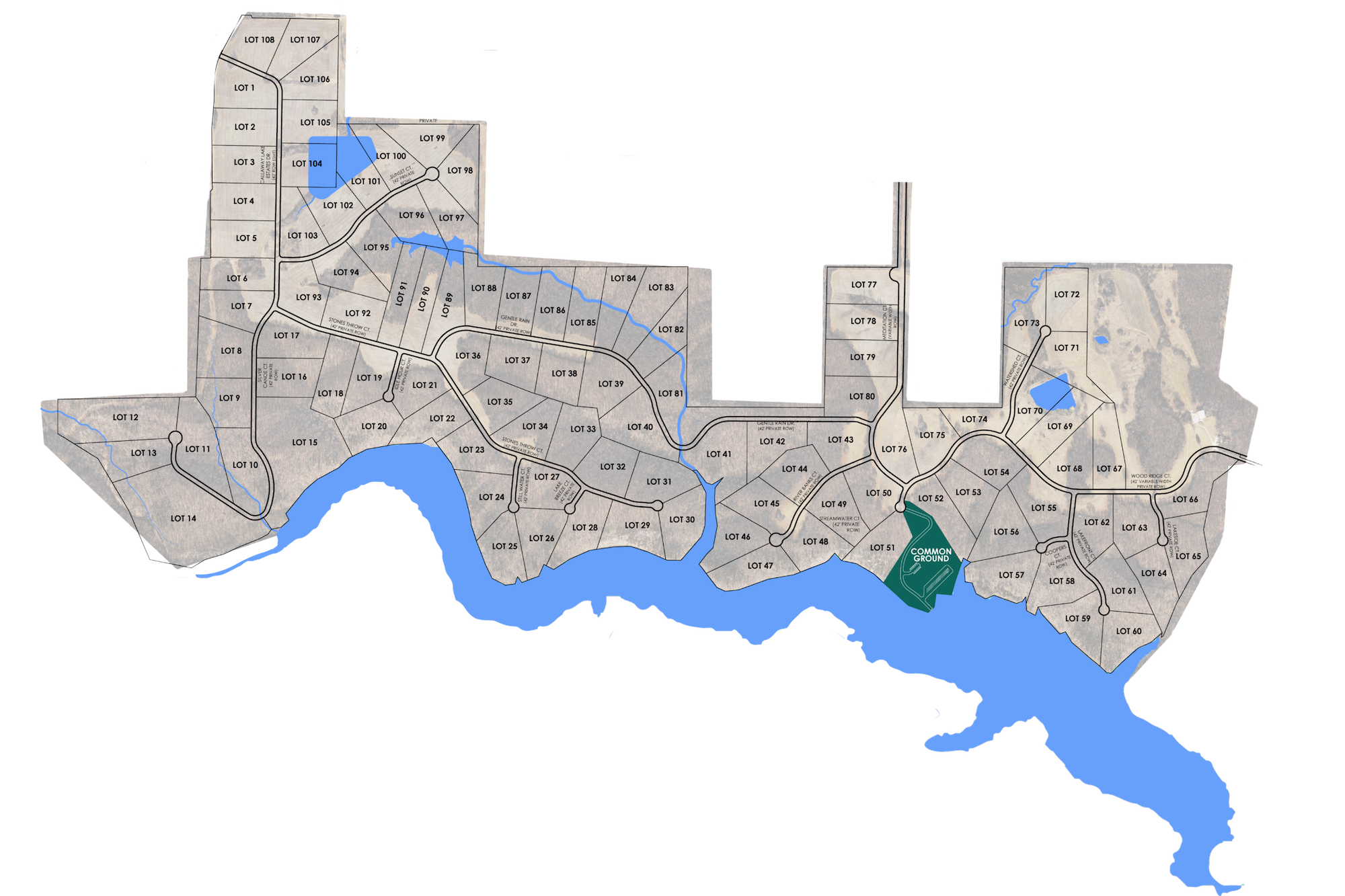
Farmland: Quality Still Wins, and the Auction Process Proves It
On the tillable side, Class A farmland is still bringing serious money. A recent auction in Clark County, Missouri, saw a highly productive tillable tract sell for $15,251 an acre after two neighbors got into a bidding war — a number that never would have shown up on a traditional listing at $15,000 flat.
Lower-quality ground with waterways, draws, and mixed cover is a different story. It's pulling back in price, mostly because it satisfies neither the farmer looking for tillable acres nor the hunter looking for prime habitat.
Pasture ground with tight fences and reliable water is holding strong too, driven by cattle prices that are about as high as anyone's seen. And buyer interest isn't just local anymore — more people are pulling money out of the stock market and parking it in income-producing land, treating it as the more consistent, tangible alternative to a market that everyone quietly suspects can't keep climbing forever. For what it's worth, the numbers back that instinct: farmland and the S&P 500 have delivered comparable long-term average returns, but land does it with a lot less volatility — and you can hunt it.
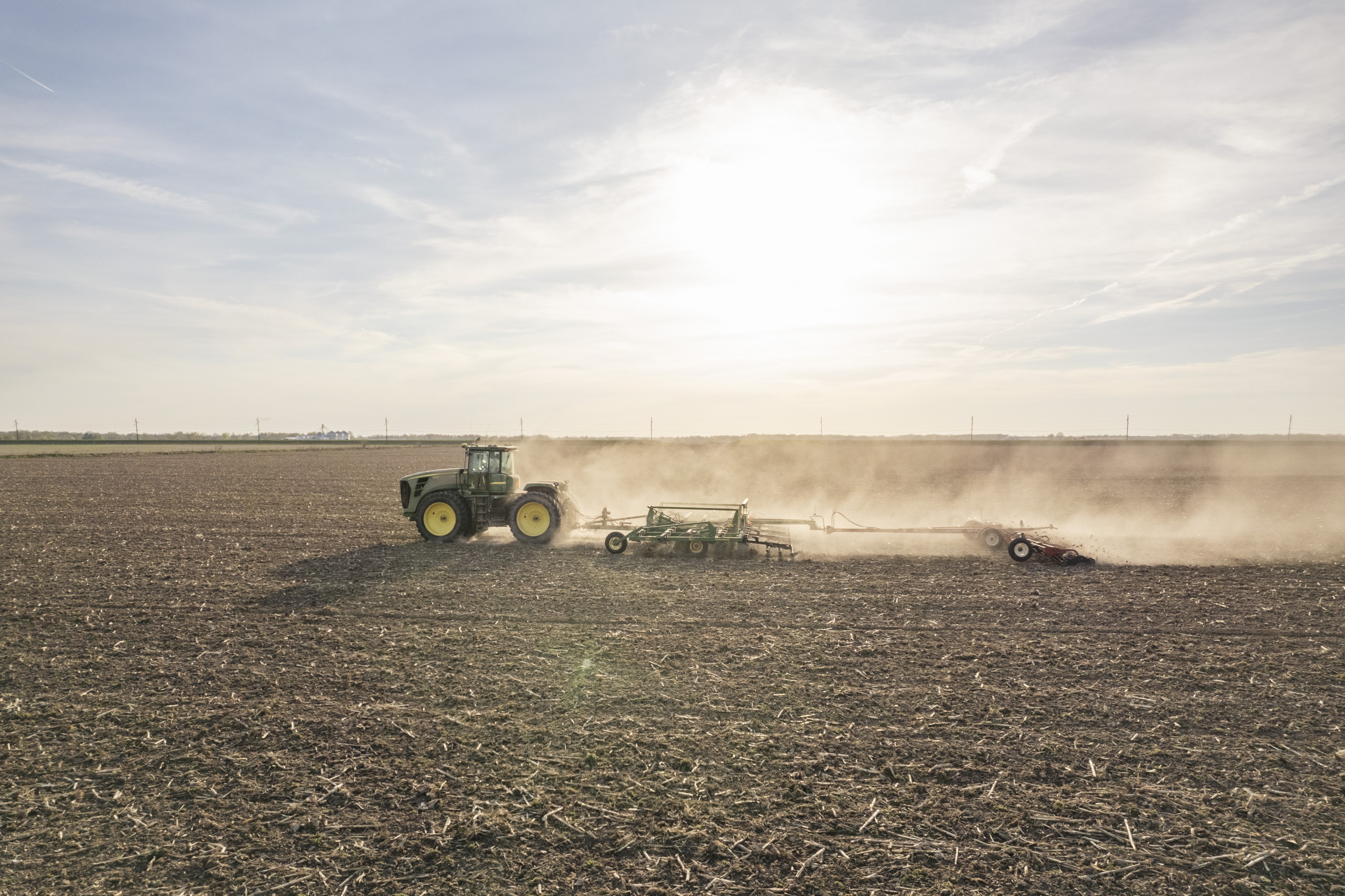
Auction vs. Listing: The Honest Version
Not every property fits an auction — especially when a seller's locked into one number. The properties that struggle at auction are usually the ones where the seller has already decided what it's worth, regardless of what the market says. The fix is setting realistic expectations up front, so that any surprise is a good one.
Here's the part sellers don't always think about: a strong offer with a fast, clean, cash close in 30 days is often worth more than chasing a slightly higher number through months of showings, negotiations, and contingencies. There's value in money, value in time, and value in convenience — and a lot of sellers underweight the second two.
The team was also candid about listings that go the traditional route and stall — start high, sit for months, then get chased down in price until it lands near where the auction reserve probably should've been in the first place. The difference: an auction compresses that whole process into a 30–45 day window and forces real competition, instead of letting the market slowly figure out the right number on its own.
What's Coming Up
TrophyCast is aiming to release new episodes every other week, with guests on estate planning, tax strategy, land management, and wildlife biology on deck. There's also a stack of live auctions running right now across Franklin, Ralls, Cedar, Howard, and Miller Counties, along with the quarterly Bundle Event — a flat $895 option built for smaller properties that don't need the full auction treatment.
Bottom line from this episode: the market hasn't fully picked a direction yet. It's not booming, it's not crashing — it's figuring itself out. But quality ground, priced honestly and marketed the right way, is still finding buyers fast.
Ep. 001: We're Back!
23
5 Signs a Property Has Trophy Potential
What to Look for When Buying Hunting Land
Not every piece of ground is a "Trophy Property". Some tracts hold deer occasionally. Others produce mature bucks so consistently you start taking it for granted. The difference between the two isn't luck, and it isn't acreage — it's whether a property checks the right boxes. And if you're serious about being set up for this fall — food plots planted, stands hung, TSI and other habitat work done — the window to buy is coming up faster than most people realize. Summer prep starts very soon.
If you're evaluating land and asking yourself whether it has the bones to become a legitimate trophy producer, here's what you need to look for.
1. Diverse, Year-Round Food Sources
Whitetails are calorie-driven animals, and matu...