
Posts from July 2026
Subscribe and receive email notifications of new blog posts.
 RSS Feed
- 2026 | 17 Posts
31
Ep. 003: What Four Conversations at Squadfest Taught Us About Waterfowl Land
TrophyCast took the show on the road this time, broadcasting live from Squadfest at Dive Bomb Industries in Hazelwood. Over the course of the day, the crew, with added host and Trophy Agent Anthony Pozzi, sat down with four guests — a decoy company founder, a habitat nonprofit director, a hunting-tech entrepreneur, and a Ducks Unlimited regional director — and each conversation circled back to the same idea: this stretch of ground along the Mississippi Flyway is genuinely rare, and the people working to protect and understand it have a lot to offer anyone buying, selling, or developing property here.
First up was Cody Stokes, founder of Dive Bomb, who traced the company's start back to 2009 — photographing geese in a park and selling silhouette decoys on Craigslist before the business became official in 2011. Squadfest itself began as a pandemic-era response to canceled outdoor events and has grown from roughly 10 vendors that first year to 85 today. Cody also walked through the property that shaped his approach to development: 200 acres of what's known locally as Portage clay, soil so heavy and water-retentive that row-crop farmers had passed on it for decades. That same trait makes it ideal for waterfowl. His advice for anyone considering a similar project is straightforward — check the soil maps before moving any dirt, and physically probe the ground yourself, since sandy pockets can sit just beneath a thin layer of clay and prevent water from holding at all. He also made a point worth remembering: land that floods naturally today likely held water long before modern drainage systems existed, and ducks recognize that history through generations of migration, even when the ground looks unremarkable to a passerby.
Next was Hannah Hopson of Great Rivers Habitat Alliance, who's spent her career defending the floodplain where the Mississippi, Missouri, and Illinois Rivers converge. GRA was founded in 2000, originally in response to a highway project cutting through wetlands, and its core argument hasn't changed since — floodplain ground is meant to flood, and letting it do so protects everyone downstream better than additional development or levees ever could. Recent work has included pushing back on data center proposals near sensitive well fields in St. Charles and encouraging utility companies to reroute transmission lines away from wetlands and farmland. Hannah also oversees the Hens Wildlife Center, a converted 785-acre former duck club that now hosts youth, veteran, and first-responder hunts alongside a well-regarded wetlands management course that draws participants from across the country to learn moist-soil management directly from experienced practitioners.
Josh Hogan followed, representing Blind Book, a platform built to solve a familiar problem for anyone selling recreational property: documenting how good the hunting actually is. Rather than a handful of photos from a strong day, Blind Book lets landowners log every hunt — blinds, harvest data, weather, and migration timing — over multiple years. What started as a way to get his own kids more engaged in the blind has become a tool clubs and outfitters use to manage their operations like a business, and one sellers can use to give buyers real documentation instead of secondhand stories.
Closing out the day was Todd Carlton, a senior regional director with Ducks Unlimited who's been with the organization since 1985 and recently marked 25 years on staff. The numbers he shared underscored the scale of the work: DU just completed a seven-year capital campaign that raised over $4 billion against a $3 billion goal, with roughly 86 cents of every dollar raised last year going directly back into habitat. That marks a third consecutive year touching over a million acres. Todd also noted DU's growing involvement with private landowners beyond hunting — CRP program support, erosion control, and clean water initiatives that benefit farmers regardless of whether they hunt waterfowl.
Four distinct conversations, one consistent conclusion: this ground is worth understanding well, whether the goal is building a duck hole, protecting a floodplain from development, documenting hunting performance, or funding habitat work across the flyway. The people doing that work daily were glad to share what they know — and based on the turnout at Squadfest, plenty of people showed up ready to listen.
A massive thank you to the outstanding companies that partnered with us for this episode: Divebomb Industries, Ducks Unlimited, Great Rivers Habitat Alliance, and BlindBook. Be sure to visit their sites and support the brands that support the show!
Divebomb Industries
divebombindustries.com
Ducks Unlimited
ducks.org
Great Rivers Habitat Alliance
grha.org
BlindBook
blindbook.com
The Link to the episode is below!
Ep. 003: Live from Squadfest
31
Ep. 002: Zach Nixon - Beck's Hybrids
Knee High by the 4th of July? Corn has changed…
TrophyCast's second episode brought in its first guest, and the crew didn't have to look far — Zach Nixon, District Sales Manager for Beck's Hybrids, covering nine counties in northeast Missouri. He's also cousins with co-host Jason Wallingford, a connection that came up more than once. Zach's a first-generation cattle farmer with a wife and three kids, six years into his career at Beck's, and he came prepared to talk shop — corn, cattle, dirt, deer, and everything in between.
First thing worth knowing: the old saying about corn being knee-high by the Fourth of July doesn't hold up anymore. Modern hybrids are tasseling by early July now. If a field isn't already well above head height by then, something either went wrong or went in late.
The bigger story this year isn't the corn's height, though — it's what farmers are up against to grow it. Diesel that guys locked in this spring around $2.50 a gallon is now pushing $4.50 by the time they fill up for harvest, nearly double, and it's a cost they have no control over. That's on top of corn sitting around $4 a bushel, which doesn't comfortably cover input costs. A wet spring compounded the problem, leaching nitrogen out of the soil and leaving a lot of fields yellow and stunted. The result is a season where many farmers are hesitant to spend on inputs even when the crop likely needs it.
Cattle, meanwhile, are having a strong run. Beef prices are about as high as anyone's seen, which tracks with the roughly 10-year cycle where cattle and crop prices tend to move in opposite directions — cheap grain makes feeding cattle more profitable, so expensive corn tends to squeeze the cattle side and vice versa.
One point worth sitting with: starting a farm operation from scratch today is close to impossible without outside income. Land, equipment, and rent are all priced beyond what a young farmer can typically support on ag income alone. Zach and his wife are first-generation cattle farmers themselves and still rely on off-farm jobs to make it work. The encouraging side of this is that more sons and daughters are coming back to take over family operations than in recent years. The challenge is that not every farm can support two or three returning children financially, which is pushing more families toward diversified income — hog barns, chicken barns, cover crops, carbon credit programs — just to make the numbers work.
Solar and wind leases came up as well, and the picture is mixed. The money is real — Zach mentioned landowners clearing six figures a year off wind towers — and it's hard to blame anyone for taking a deal that size. But there's legitimate concern about what happens to good Class A tillable ground once towers, buried lines, and access roads go in. That ground doesn't return to full production, regardless of what happens to the lease down the road.
One clarification worth making, since the two terms often get used interchangeably: hybrid corn and GMO corn are not the same thing. Hybridization — crossing two inbred parent lines to produce a stronger plant — dates back nearly a century, the same basic principle as crossing an Angus with a Hereford. GMO traits are bred in separately, on top of that hybrid base — herbicide tolerance, pest resistance, and similar characteristics. A hybrid can be entirely non-GMO. It's the added trait, not the hybridization itself, that makes something a GMO.
On the practical side, drone spraying is gaining ground quickly, particularly for fungicide application, and it's proving especially useful on oddly shaped or hard-to-fly fields. The streaky, uneven crops sometimes shown online as evidence against drones are typically the result of an operator covering too much ground too fast, not a shortcoming of the technology itself. In equipment, the used market is where the activity is — new machinery sales are slow across the board, while older, simpler tractors that farmers can repair themselves without a shop visit are holding, and in some cases increasing, in value. Virtual fencing for cattle is also on the horizon: GPS collar systems, similar in concept to an invisible dog fence, scaled up for herds in the thousands, replacing physical paddock fencing with boundaries set on a phone.
But the most useful takeaway from this conversation wasn't about commodities or technology at all — it was about being a good neighbor. As more land changed hands to outside investors and recreational buyers, the advice was simple and consistent: get to know the people around you, respect the history already tied to the land you're buying, and remember that wildlife doesn't recognize property lines. A landowner who shows up and introduces themselves tends to get much further than one who doesn't.
Ep. 002: Zach Nixon - Beck's Hybrids
10
Ep. 001: We're Back!
TrophyCast Is Back — Here's What's Really Happening in the Land Market
TrophyCast just came back from a long break, and it's back with more voices at the table. Mike Meagher, Jason Wallingford, and Jake Brown sat down to catch up on everything that's changed in Midwest real estate over the last few years. No script, no fluff — just three guys who work in this market every day talking through what they're actually seeing.
Residential: It Depends Where You're Standing
Ask three agents how the housing market's doing and you might get three different answers, and that's basically what happened here. The read: there's no clean trend line up or down right now. It's sporadic, and it comes down to location and price point.
Entry-level and move-up housing under $500,000 in tight submarkets — St. Louis County, St. Charles County, Warren and Lincoln Counties — is still moving fast, with multiple showings and multiple offers when good inventory hits. The $500,000–$1 million range has been slower. But interestingly, the $1.5 million-plus segment picked up steam early this year, with listings that sat untouched all of last year finally going under contract in the first quarter.
The bigger shift is buyer behavior. Contingencies are back. Inspections are killing more deals than they used to. Buyers aren't panic-buying the way they were a few years ago — they're pickier, and they expect a house to actually be move-in ready.
One point worth remembering if you're pricing a listing: overshooting the number doesn't just cost you time, it can cost you the whole sale. List too high, and by the time you reduce, buyers assume something's wrong with the house. The list price is a marketing price — not a wish.
A New Development Worth Knowing About
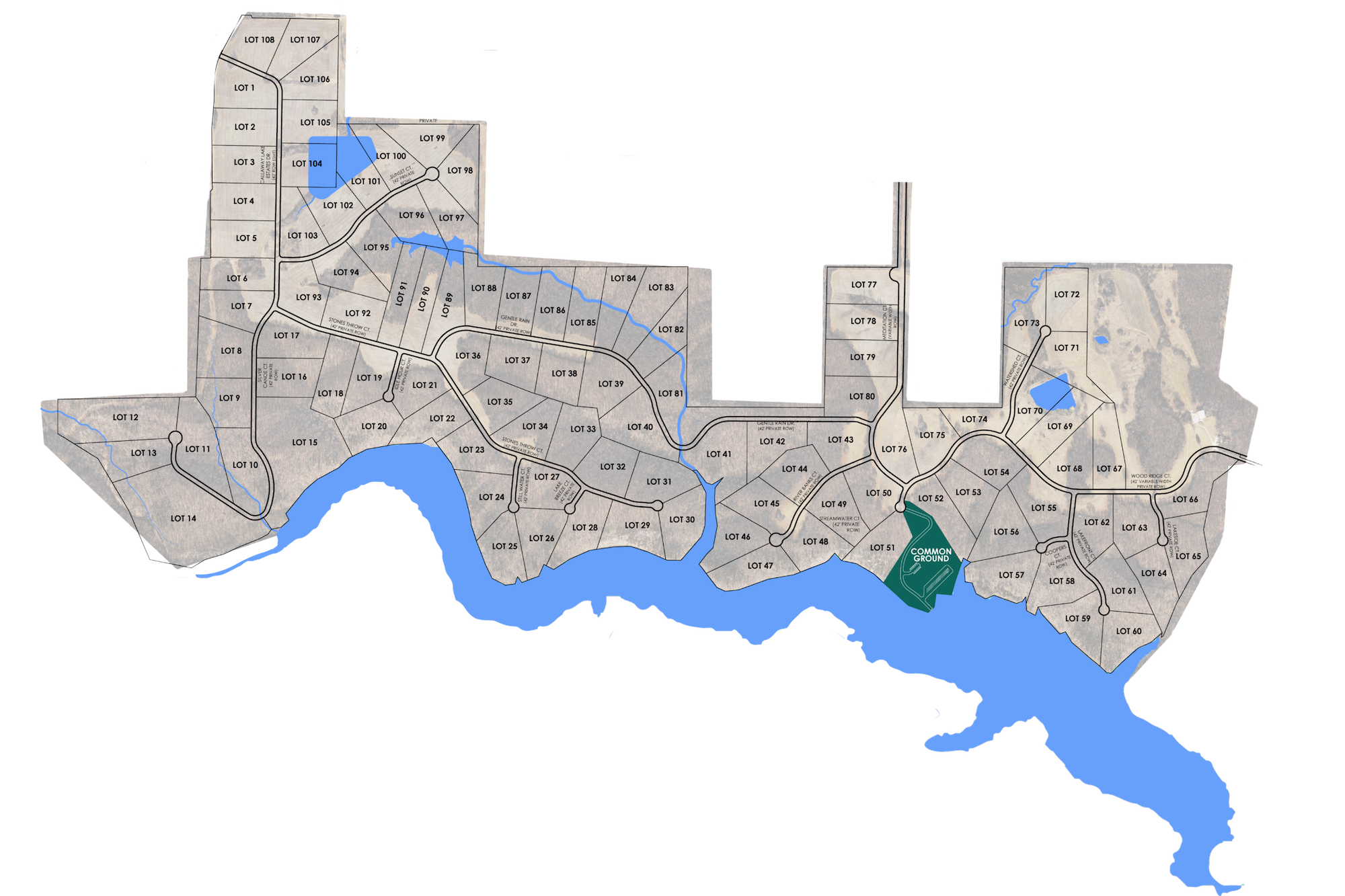
Callaway Lake Estates, a development offering 5 acre lots just outside Defiance/New Melle with lake access to a 170-acre private lake, came up as one to watch. It's the kind of property that feels remote — wooded, quiet, private marina, boat slips — but sits about 25–30 minutes from Chesterfield Valley. Waterfront and water-view lots have been moving, though plenty of buildable acreage remains.
The bigger question hanging over that whole corridor: data centers. Several are planned west of the metro, and nobody's fully sure yet what that means for property values or quality of life nearby. The honest answer from the team: reserve judgment until the first one actually goes in and everyone can see the real impact instead of guessing at it.
Farmland: Quality Still Wins, and the Auction Process Proves It
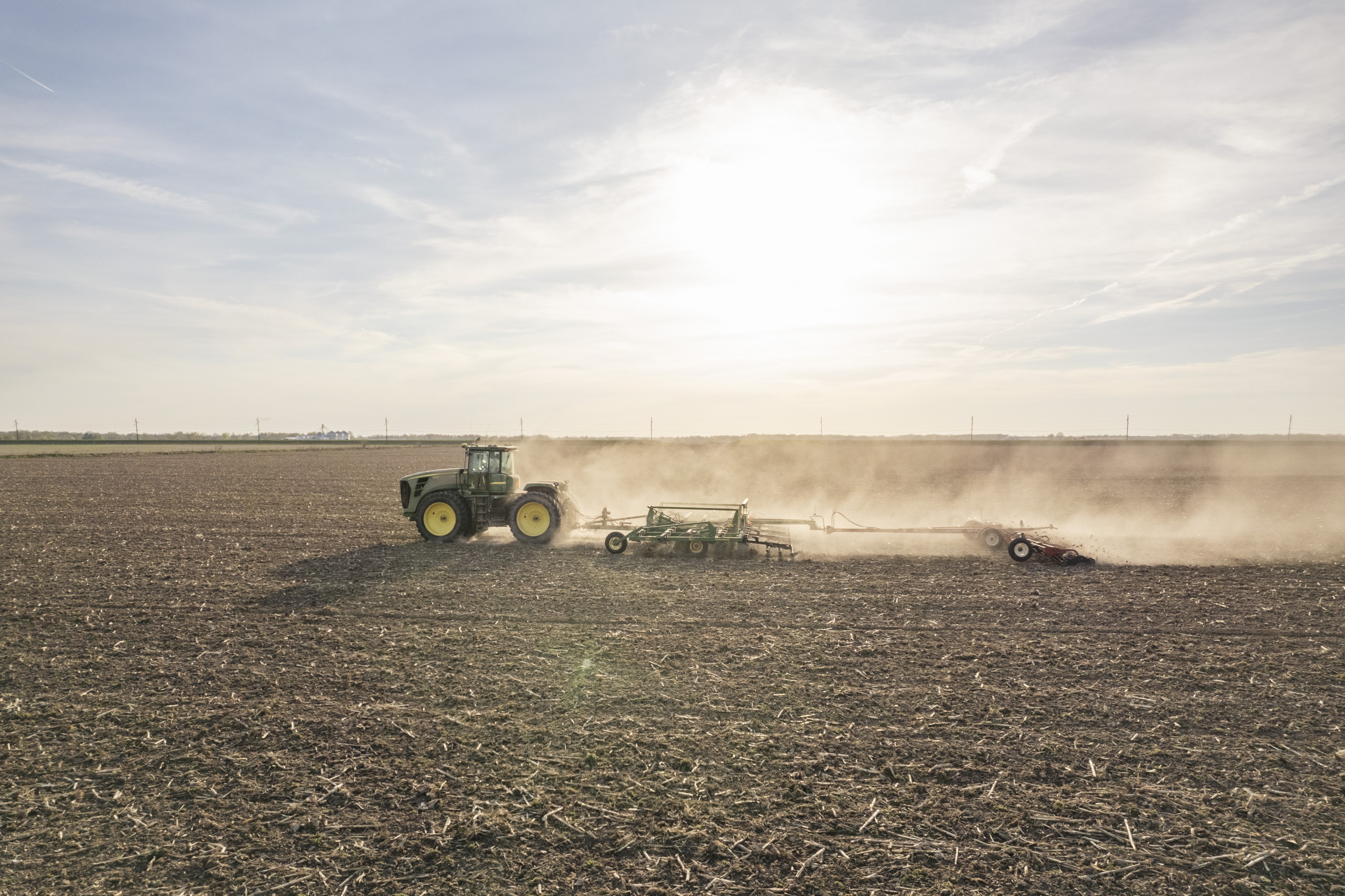
On the tillable side, Class A farmland is still bringing serious money. A recent auction in Clark County, Missouri, saw a highly productive tillable tract sell for $15,251 an acre after two neighbors got into a bidding war — a number that never would have shown up on a traditional listing at $15,000 flat.
Lower-quality ground with waterways, draws, and mixed cover is a different story. It's pulling back in price, mostly because it satisfies neither the farmer looking for tillable acres nor the hunter looking for prime habitat.
Pasture ground with tight fences and reliable water is holding strong too, driven by cattle prices that are about as high as anyone's seen. And buyer interest isn't just local anymore — more people are pulling money out of the stock market and parking it in income-producing land, treating it as the more consistent, tangible alternative to a market that everyone quietly suspects can't keep climbing forever. For what it's worth, the numbers back that instinct: farmland and the S&P 500 have delivered comparable long-term average returns, but land does it with a lot less volatility — and you can hunt it.
Auction vs. Listing: The Honest Version
Not every property fits an auction — especially when a seller's locked into one number. The properties that struggle at auction are usually the ones where the seller has already decided what it's worth, regardless of what the market says. The fix is setting realistic expectations up front, so that any surprise is a good one.
Here's the part sellers don't always think about: a strong offer with a fast, clean, cash close in 30 days is often worth more than chasing a slightly higher number through months of showings, negotiations, and contingencies. There's value in money, value in time, and value in convenience — and a lot of sellers underweight the second two.
The team was also candid about listings that go the traditional route and stall — start high, sit for months, then get chased down in price until it lands near where the auction reserve probably should've been in the first place. The difference: an auction compresses that whole process into a 30–45 day window and forces real competition, instead of letting the market slowly figure out the right number on its own.
What's Coming Up
TrophyCast is aiming to release new episodes every other week, with guests on estate planning, tax strategy, land management, and wildlife biology on deck. There's also a stack of live auctions running right now across Franklin, Ralls, Cedar, Howard, and Miller Counties, along with the quarterly Bundle Event — a flat $895 option built for smaller properties that don't need the full auction treatment.
Bottom line from this episode: the market hasn't fully picked a direction yet. It's not booming, it's not crashing — it's figuring itself out. But quality ground, priced honestly and marketed the right way, is still finding buyers fast.
Ep. 001: We're Back!